

Starting the treatment process toward a fuller beard is an exciting decision, but the days following your procedure are often filled with questions. While the surgery itself is behind you, the first seven days are when the real work of healing happens. Understanding the beard transplant recovery time is the best way to stay calm and ensure your new grafts have the best environment to thrive.
What Happens During the First Week After a Beard Transplant?
The first week is when your body focuses entirely on “anchoring” the new follicles. It is a period of rapid change where your skin moves from the initial trauma of surgery toward a stabilized state.
The First 48 Hours
Right after your session, you’ll see tiny red spots and a bit of crusting around each new hair. While it looks a little raw, this is actually your skin doing its job. It’s essentially “sealing” the area to keep the new follicles safe and sterile while they start to settle in.
Managing the Puffiness
Don’t be surprised if your jaw or cheeks look a bit swollen—this usually hits its peak around day three. You might feel a strange tightness, almost like a mild sunburn, but that’s just a sign of your body sending extra blood to the area to speed up healing. That heavy, tender feeling usually starts to lift shortly after.
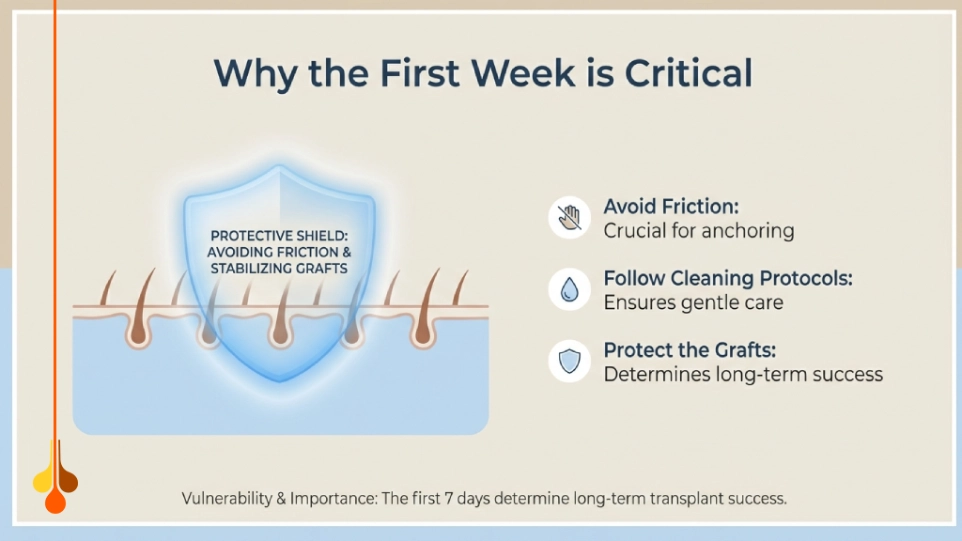
Why the First Week is Critical
The follicles are at their most vulnerable during these first seven days. Avoiding friction and following your cleaning protocol exactly is what makes the difference between a successful transplant and lost grafts.
Check Your One-Week Progress
Curious how your new beard follicles are settling in? Book your one-week post-op consultation and get expert guidance on your recovery.
Beard Transplant After 1 Week: Assessing Your Progress
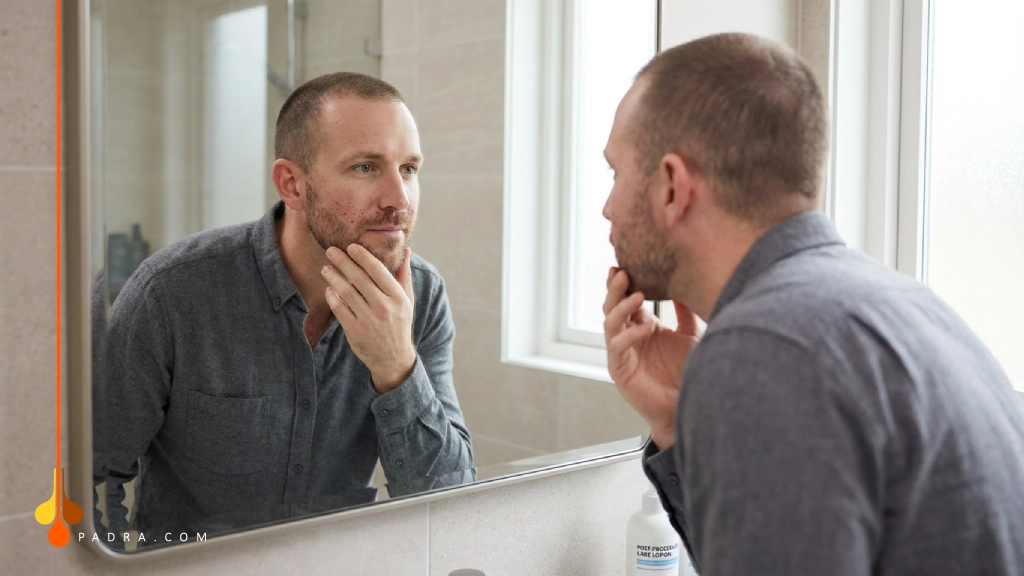
By the time you hit the seven-day mark, that “freshly operated” look starts to settle down. If you’re checking your reflection and wondering about your beard transplant after 1 week, here is the typical progress we look for:
- Skin Tone Changes: That intense post-procedure redness should be cooling off, usually leaving the skin a soft pink color similar to a fading sunburn.
- The Flaking Stage: You’ll notice the scabs are quite dry now. As you follow your gentle washing routine, these crusts will start to flake away on their own—don’t be tempted to help them along by picking.
- Physical Sensation: Any real soreness usually vanishes by day seven. In its place, you might feel a bit of “tingling” or an itchy sensation. This is actually a great sign; it means your local nerves are waking up and the skin is regenerating.
The 10-Day Milestone: Turning the Corner
Reaching a beard transplant after 10 days is often the moment patients start to feel like themselves again. It’s a major psychological shift in the recovery process.
- Clearer Skin Texture: Most of the crusting has usually finished falling off by now. This reveals the short, newly planted hair shafts and leaves the skin looking much smoother and healthier.
- Getting Back to Life: This is typically the point where our patients stop feeling “self-conscious” about their appearance. You can generally jump back into your usual social circles and daily habits with the confidence that the most obvious signs of the procedure have faded.
The “Shedding” Phase: Beard Transplant After 1 Month
It can be startling, but at beard transplant after 1 month, you will likely notice the new hairs falling out.
This is not a sign of failure. This is a biological transition where the hair shaft sheds so the follicle can enter a resting phase. Your skin should look completely normal now, with the real growth happening beneath the surface over the coming months.
Beard Transplant Day by Day: Your Early Recovery Guide
While every patient’s body responds differently, this beard transplant day by day breakdown offers a reliable look at the early healing rhythm:
| Timeline | Focus | Typical Experience |
|---|---|---|
| Days 1–3 | Protection | Redness, scabbing, and peak swelling. |
| Days 4–7 | Stabilization | Swelling subsides; scabs dry out and itch. |
| Days 8–10 | Clearing | Scabs wash away; skin looks healthy and pink. |
| Weeks 2–4 | Integration | Redness disappears; the “shedding” phase begins. |
Beard Transplant Recovery Time — How Long Does Healing Take?
When we talk about the beard transplant recovery time, we have to look at two different timelines:
- Surface Healing (7–10 Days): This is when the skin repairs itself and the “wounds” close.
- Growth Maturation (4–12 Months): This is the internal timeline where the follicles produce visible, permanent hair. Most patients feel “back to normal” in their appearance within two weeks.
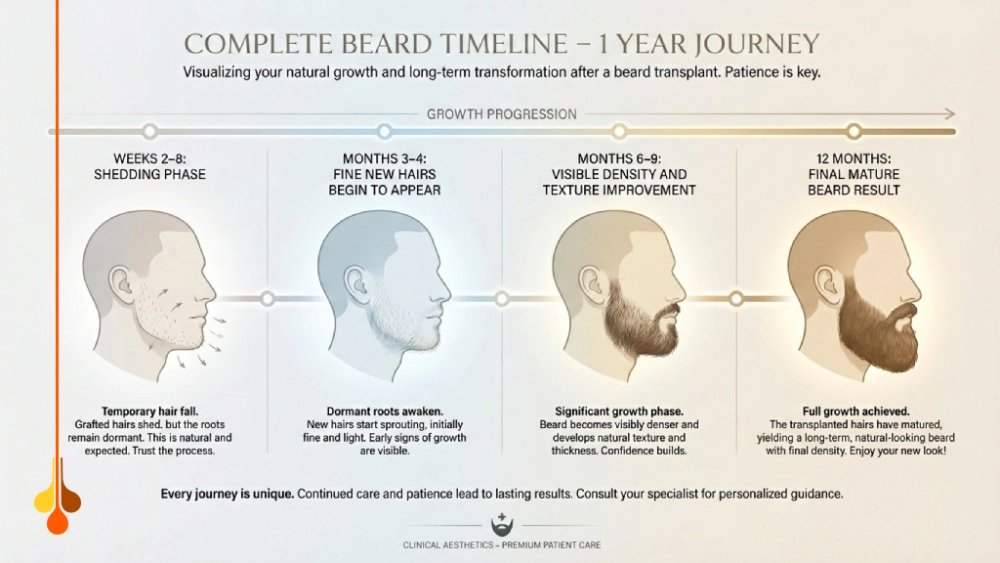
The Complete Beard Transplant Timeline: Healing to Growth
Patience is the most important part of your beard transplant timeline. Results do not happen overnight:
- Weeks 2–8: The shedding phase (temporary hair loss).
- Months 3–4: Fine, new hairs begin to break the surface.
- Months 6–9: A noticeable increase in density and texture.
- 1 Year: The final, mature beard result is achieved.
Protecting Your Results: What to Avoid
To ensure a smooth recovery, please steer clear of the following during the first few weeks:
- Scratching or Picking: Let scabs fall off naturally to avoid pulling out the graft.
- Early Shaving: Keep razors away for at least 10 to 14 days.
- Sun and Heat: Avoid direct sunlight and saunas, as the new skin is highly sensitive to UV and temperature.
- Harsh Products: Use only the clinical cleansers we recommend.
[blog_cta]
When to Contact the Clinic
We are with you every step of the way. Please reach out to our medical team if you experience:
- Redness that spreads or feels increasingly hot after day 5.
- Excessive swelling that does not begin to subside.
- Signs of infection or persistent discharge.
Personalized Care for Stable Results
The first week of recovery sets the stage for a lifetime of confidence. Our team is dedicated to ensuring your healing process is as comfortable and successful as possible through professional follow-up and expert guidance.