


Celebrating 1 million hair transplants Beauty website

Product-Specific Injectable Scalp Treatment

Hair filler refers to product-specific injectable formulations used as part of selected hair and scalp treatment plans. Because formulations can differ in their ingredients, approved indications, and supporting evidence, the exact product, its intended role, and individual suitability should be confirmed before treatment.

Hair Filler Treatment

Who We Are

Padra provides assessment-led hair-loss care, with non-surgical options selected according to diagnosis, scalp condition, follicle activity, medical history, and treatment goals.

  • Product and protocol review before treatment
  • Personalized planning based on individual suitability
  • Clear guidance on expected results and limitations
  • Coordinated care across Padra’s international network

Why Patients Choose Padra for Hair Filler

There is no single universal hair filler product or protocol. At Padra, the formulation is reviewed before treatment; its intended role is explained clearly, individual suitability is assessed, and realistic expectations are discussed before the treatment plan begins.

Everything You Should Know About Hair Filler

Hair filler is a broad term for injectable scalp products that may be used to support scalp hydration, hair quality, or selected cases of early thinning. It is not one standardized treatment, and different products can contain different active ingredients, follow different protocols, and have different approved uses.

For this reason, treatment should be based on the exact product being used, the condition of the scalp and hair, the likely cause of thinning, and whether the patient is an appropriate candidate. Hair filler is generally considered a supportive treatment rather than a replacement for proper diagnosis or established medical treatment when these are needed.

  • Product-specific formulations: Some products may contain hyaluronic acid, peptides, amino acids, or other compounds, depending on the manufacturer and approved formulation.
  • Different evidence and protocols: Supporting evidence, treatment schedules, injection techniques, and expected outcomes can vary from one product to another.
  • Supports existing follicles: Hair filler may be used to support hair or scalp quality in selected cases where follicles remain active, but it does not create new follicles.
  • Not a solution for advanced baldness: It should not be presented as a treatment that reverses long-standing or advanced bald areas.
  • Diagnosis still matters: Hair filler should not replace evidence-based treatment for genetic, inflammatory, scarring, or other medically significant causes of hair loss when those treatments are indicated.
  • Suitability should be assessed first: The exact product, intended role, contraindications, and treatment expectations should be reviewed before starting treatment.

Hair filler may be considered for selected adults with dry, fragile, weakened, or early-stage thinning hair, provided active follicles remain and the chosen product has a clear intended role.

It should not be selected simply because hair loss is present. Genetic hair loss, patchy alopecia, scalp inflammation, scarring, sudden shedding, or advanced baldness require proper diagnosis and may need a different treatment approach.

Suitability also depends on factors such as product sensitivity, active infection, pregnancy, medications, and medical history.

Some hair filler products may contain hyaluronic acid, peptides, amino acids, or other compounds. Ingredients vary by product, so the specific product label and medical information should always be reviewed before treatment.

The process begins with an assessment of the hair-loss pattern, scalp condition, hair quality, and possible cause of the concern.

The specific product is then reviewed, including its ingredients, batch information, intended use, contraindications, and expected role in the treatment plan.

Injection areas are selected according to the concern and the approved product protocol. The scalp is cleansed, and topical anesthesia or other comfort measures may be used when appropriate.

The product is injected into the planned scalp areas using a sterile technique.

After treatment, the immediate response is checked, and patients receive guidance on hair washing, exercise, heat exposure, product use, and follow-up.

Results and their duration vary from person to person, so Hair Filler should not be presented with a guaranteed one-year result or a general promise of new hair growth.


Progress should be assessed using factors such as hair quality, scalp comfort, shedding patterns, and standardized photographs. Benefit should not be assumed simply because a treatment course has been completed.

Temporary tenderness, redness, swelling, bruising, itching, small bumps, or minor bleeding may occur at the injection sites.

Less common risks may include infection, allergic reactions, nodules, persistent inflammation, vascular or nerve injury, skin discoloration, or scarring, depending on the product used and injection technique.

The product should be traceable and appropriately approved for use in the relevant location.

Hair filler should not be selected simply because hair loss is present. Genetic hair loss, patchy alopecia, scalp inflammation, scarring, sudden shedding, or advanced baldness require proper diagnosis and may need a different treatment approach.

In some cases, PRP, mesotherapy, laser-based treatment, medication, or a hair transplant assessment may be more appropriate.

HAIR FILLER VS PRP VS MESOTHERAPY

Treatment What It Uses Primary Role Key Limitation
Hair Filler Product-specific injectable scalp formulation May support scalp or hair quality in selected cases, depending on the approved product and protocol. Evidence and claims vary by product. Verify the exact formulation and indication.
Hair PRP Platelet-rich plasma prepared from the patient’s own blood May support hair density or quality in selected patients with active follicles. Protocols and response vary. PRP does not create new follicles in long-standing bald areas.
Hair Mesotherapy Clinician-selected intradermal formulation Targeted supportive scalp treatment that may be considered after diagnosis. There is no universal formulation or schedule. Evidence varies by protocol.

Key Differences

  • PRP is prepared from the patient’s own blood.
  • Hair filler is defined by the exact commercial product used.
  • Mesotherapy refers to intradermal delivery of a clinician-selected formulation.
  • Product and protocol transparency are essential before choosing hair filler.

PADRA'S HAIR LOSS TREATMENT OPTIONS

  • Fotona Laser for Hair Loss

    A non-surgical laser-based option that may support selected cases of thinning when follicles remain active.

  • Hair Mesotherapy

    Uses small intradermal injections to deliver a clinician-selected formulation into targeted scalp areas.

  • Hair Loss Treatment for Men

    Assessment-led planning for male-pattern thinning, crown loss, receding hairlines, and other diagnosed causes.

  • Hair PRP

    Uses platelet-rich plasma prepared from the patient’s own blood to support selected cases of thinning or reduced hair quality.

  • Hair Filler

    A product-specific injectable option that may support scalp or hair quality depending on the approved formulation.

  • Hair Loss Treatment for Women

    Personalized evaluation for widening parts, diffuse thinning, shedding, and other female hair-loss patterns.

Hair Filler: Your Questions, Answered

Not Sure If Hair Filler Fits Your Hair?

What Are Hair Fillers?

Hair fillers are injectable treatments designed to enhance the quality and density of hair by delivering a combination of active ingredients directly to the scalp. These fillers target hair follicles to stimulate growth, strengthen strands, and improve the overall condition of the scalp.

The treatment often includes components like:

  • Hyaluronic Acid: For hydration and scalp rejuvenation.
  • Peptides: To stimulate hair follicle activity and promote growth.
  • Vitamins and Minerals: For nourishment and hair health.
  • Biotin (Vitamin B7): Known for strengthening hair and preventing breakage.

Hair fillers are suitable for both men and women experiencing thinning hair or early-stage hair loss.

How Do Hair Fillers Work?

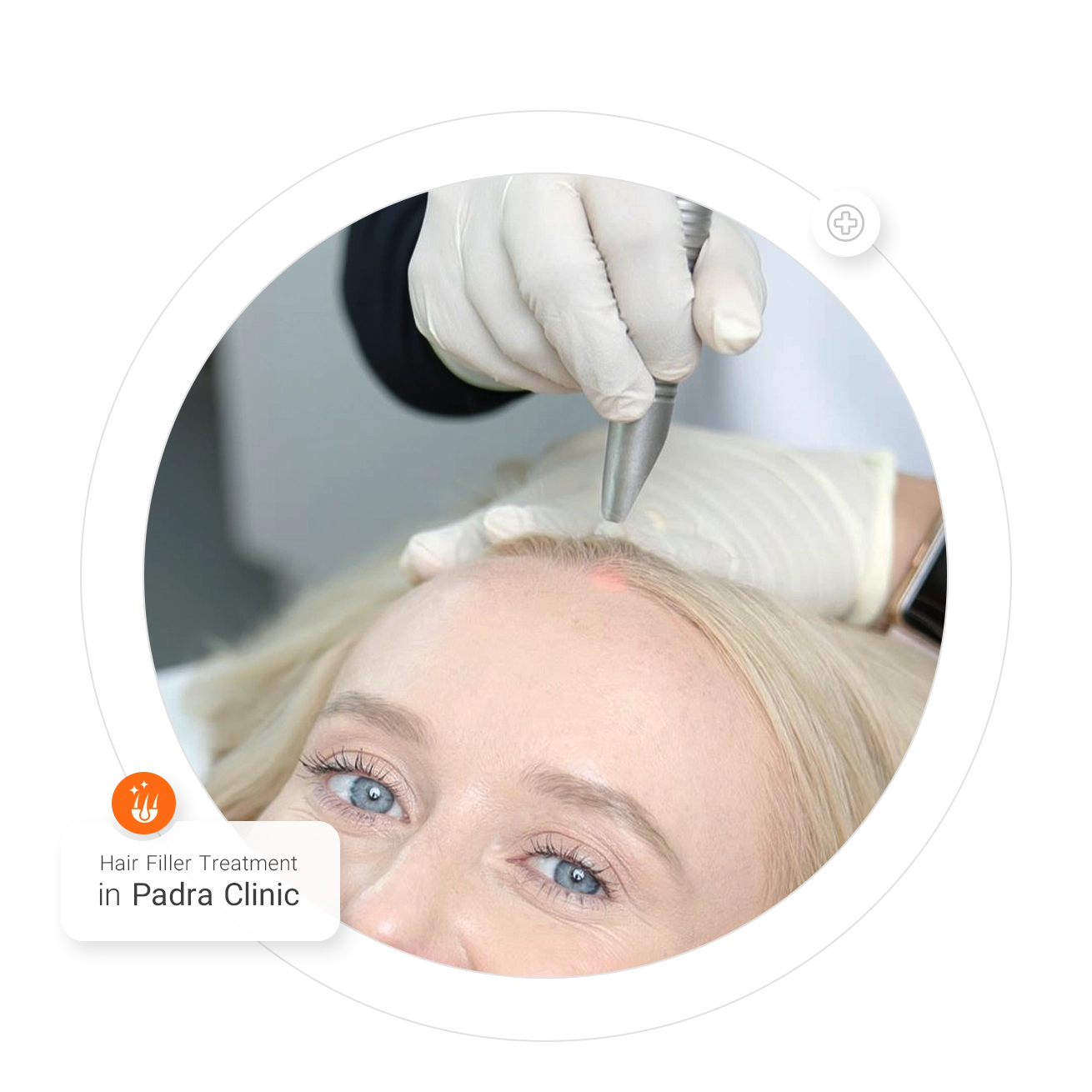
hair filler injection

Hair fillers work by targeting the scalp and hair follicles directly, delivering essential nutrients that improve hair density and strength. Here’s how the process unfolds:

  1. Scalp Assessment: The specialist evaluates the scalp to identify areas of thinning and customize the filler solution.
  2. Injection: Using fine needles, the filler is injected into the scalp in targeted areas where hair is thinning.
  3. Stimulation: The active ingredients in the filler stimulate blood circulation and collagen production, revitalizing the hair follicles.

The procedure typically takes 30–60 minutes and requires no downtime. It’s a simple yet effective treatment for achieving visibly thicker hair.

Benefits of Hair Fillers

Hair fillers are gaining popularity due to their ability to transform thinning hair into fuller, healthier locks. Here are the key benefits:

  1. Increased Hair Volume: Hair fillers add density to thinning areas, resulting in visibly fuller hair.
  2. Stronger Hair Strands: The nutrients in the filler strengthen existing hair, reducing breakage and hair fall.
  3. Improved Scalp Health: Hydrating and nourishing ingredients promote a healthier scalp, creating the perfect environment for hair growth.
  4. Non-Surgical Solution: Unlike hair transplants, hair fillers are minimally invasive and painless.
  5. Quick Results: Many patients notice improvements in hair texture and thickness within a few sessions.

Who Can Benefit from Hair Fillers?

Hair fillers are ideal for individuals experiencing:

  • Early-stage hair thinning
  • Hair loss due to stress or hormonal changes
  • Weak, brittle hair
  • Reduced hair density

However, those with advanced hair loss or completely bald areas may require additional treatments, such as hair transplantation or PRP therapy, for optimal results.

What to Expect During and After Hair Filler Treatment

Hair filler treatments are straightforward and relatively painless. Here’s what you can expect:

  1. Before the Procedure:
    • A consultation with a specialist to evaluate your hair and scalp condition.
    • You may be advised to avoid anti-inflammatory medications and alcohol before the session.
  2. During the Procedure:
    • The scalp is cleaned, and a numbing cream may be applied to ensure comfort.
    • The filler is injected into targeted areas of the scalp using fine needles.
  3. After the Procedure:
    • Mild redness or sensitivity in the treated areas may occur but subsides within a day.
    • Patients can return to their normal routine immediately.
    • Noticeable improvements in hair density are typically seen after 2–3 sessions.

How Many Sessions Are Needed?

Hair filler treatments are typically performed in a series of 3–5 sessions, spaced about 2–4 weeks apart. Maintenance sessions every 6–12 months are recommended to sustain results and keep the hair looking healthy and voluminous.

Why Choose Hair Fillers for Thinning Hair?

Hair fillers are a revolutionary solution for anyone struggling with thinning hair or a lack of volume. By targeting the root causes of hair loss, this treatment not only enhances hair density but also improves overall scalp health.

With visible results after just a few sessions, hair fillers offer a convenient, non-surgical alternative for achieving thicker, healthier hair.

Conclusion: Transform Your Hair with Hair Fillers

If you’re tired of dealing with thinning hair and want a safe, effective solution, hair fillers could be the perfect treatment for you. Consult a specialist today to learn more about this innovative therapy and take the first step toward revitalized, voluminous hair!

Need an Appointment?

Share your details and our team will contact you to guide your next step, answer your questions, and help you understand whether FUE is the right option for your hair loss pattern.