


























Hair Transplant Designed for Natural-Looking Results
A successful hair transplant should restore more than lost hair. It should rebuild density, frame the face naturally, and create a result that does not look transplanted.
At Padra, every hair transplant procedure is planned around your hair loss pattern, donor area, facial structure, hair texture, and long-term goals. From hairline design to graft placement and recovery guidance, the focus is always the same: natural-looking hair restoration that feels personal, balanced, and realistic.
Whether you are considering an FUE hair transplant, a DHI hair transplant, a crown restoration, or a hairline transplant, the right plan starts with a thorough medical assessment.
Hair Transplant at a Glance
A hair transplant is a medical procedure that moves healthy hair grafts from a stronger donor area, usually the back or sides of the scalp, into areas affected by thinning or hair loss.
Because the transplanted grafts come from your own hair, the result can grow and blend naturally when the procedure is planned correctly. The final appearance depends on several details, including graft quality, hairline design, placement angle, density planning, donor-area management, and aftercare.
Typical treatment details may include technique selection, procedure time, local anesthesia, early healing, gradual hair growth, and follow-up care. Visible growth often starts around 3 to 4 months, while fuller results usually develop between 6 and 12 months, with further maturation possible afterward.
Every patient is different, so the exact plan and timeline should be confirmed during consultation.
What Is a Hair Transplant?
A hair transplant is a surgical hair restoration procedure designed to move healthy follicles from a stable donor area to areas where hair has become thin or sparse. These follicles are implanted into the recipient area in a way that follows the natural direction, angle, and density pattern of your existing hair.
The goal is not simply to fill empty areas. A well-planned hair transplant should restore visual balance, create natural density, and support a hairline that suits your face now and in the future.
At Padra, the planning stage is especially important. Before recommending a technique or graft number, the medical team evaluates your hair loss cause, donor area strength, scalp condition, hair characteristics, and expectations. This helps determine whether a transplant is the right step or whether hair loss treatment should come first.
What Makes a Hair Transplant Look Natural?
Natural-looking hair transplant results depend on planning, not only graft count. A high number of grafts does not automatically create a better result if they are placed poorly, taken aggressively from the donor area, or used without a clear design strategy.
A natural result comes from the way each detail works together: the hairline shape, graft angle, direction, density, texture, donor area, and how the new hair blends with existing hair.
The most natural hair transplants are designed to look like the hair was always there.
Hairline Design
Hairline design is one of the most important parts of a natural hair transplant. A hairline that is too low, too straight, or too dense can look artificial, especially as the patient ages.
A natural hairline should match the patient’s age, facial proportions, forehead balance, temple shape, and natural growth pattern. It should not look like a sharp line or a block of identical hair. Instead, the transition should be softer at the front, with careful density planning behind it.
This is why hairline transplant planning must be personalized. The right hairline for one patient may look unnatural on another.
Correct Graft Angle and Direction
Hair does not grow in one flat direction. Each area of the scalp has its own natural growth angle, and transplanted grafts must follow that pattern.
At the front hairline, the angle is usually softer and more forward. At the temples, the direction can be more delicate and specific. In the crown, hair often grows in a swirl or circular pattern, which makes placement more complex.
If grafts are placed at the wrong angle or direction, the hair transplant can look artificial even if the grafts survive. This is why correct graft placement requires both technical precision and aesthetic judgment.
Density Planning
Natural density is not about placing as many grafts as possible in one area. It is about using the available donor hair wisely to create the greatest visual improvement.
Some patients need a higher density at the frontal hairline. Others need more coverage in the mid-scalp or crown. In many cases, the surgeon must balance current coverage with future hair loss risk, so the donor area is preserved for possible future needs.
Good density planning helps the result look fuller without overusing the donor area.
Hair Texture and Blending
Hair texture, thickness, color, curl pattern, and contrast with the scalp all affect how dense the result appears.
Coarser or wavy hair may create more visual coverage with fewer grafts, while fine or straight hair may require a different density strategy. Dark hair on a light scalp can also create a stronger contrast, making density planning more important.
The transplanted hair must blend with the patient’s existing hair. This is especially important at the hairline, temples, and crown.
Donor Area Management
The donor area is the foundation of every hair transplant. If too many grafts are taken from one area, the back or sides of the scalp may look thin or patchy.
A natural hair transplant protects both the recipient area and the donor area. The goal is to improve thinning areas while keeping the donor region balanced and natural-looking.
This is why donor-area evaluation should happen before any graft number is promised.
Surgeon Experience
Hair transplantation is not just a technical procedure. It requires medical judgment, facial analysis, donor-area planning, and artistic control.
An experienced hair transplant team understands how to design a result that looks natural from the front, sides, and crown – not just in one photo angle.

Hair Transplant Procedure: Step by Step
Every hair transplant procedure begins with planning. The exact process may vary depending on the technique, number of grafts, and treatment area, but the core steps usually include assessment, design, extraction, implantation, and recovery guidance.
1. Consultation and Hair Loss Diagnosis
The first step is understanding why hair loss is happening. Male pattern hair loss, female pattern thinning, stress-related shedding, traction alopecia, medical conditions, or previous procedures may all require different approaches.
During consultation, the team evaluates your scalp, donor area, hair loss pattern, and expectations. This helps determine whether you are ready for a transplant or whether hair loss treatment should be considered first.
2. Hairline and Treatment Planning
Your hairline, crown, mid-scalp, or thinning area is planned based on facial structure, natural growth pattern, and available donor hair.
A good plan does not only focus on today’s hair loss. It also considers how your hair may change over time.
3. Donor Area Preparation
Healthy follicles are usually taken from the back or sides of the scalp, where hair is often more stable. The donor area is assessed carefully to avoid overharvesting and protect long-term density.
4. Graft Extraction
In a FUE hair transplant, individual follicular units are extracted one by one from the donor area. This avoids the linear scar associated with strip methods and supports a more refined recovery experience.
5. Graft Placement
The extracted hair grafts are implanted into the recipient area according to the planned angle, direction, and density. This stage is essential for natural-looking results.
6. Recovery and Follow-Up
After the procedure, patients receive instructions for hair transplant recovery to protect the grafts and support healing. The first days and weeks are important, but the full result develops gradually over several months.
Which Hair Transplant Method Is Right for You?
There is no single best hair transplant method for every patient. The right technique depends on your hair loss pattern, donor area strength, number of grafts needed, scarring concerns, recovery expectations, hair length preference, treatment area, budget, and doctor recommendation.
The best method is the one that matches your medical condition and aesthetic goal.
FUE Hair Transplant
FUE, or Follicular Unit Extraction, is one of the most widely used modern hair transplant techniques. It involves extracting individual follicular units from the donor area and implanting them into thinning or bald areas.
A FUE hair transplant is often preferred by patients who want a refined approach, no linear strip scar, and a recovery process that fits more easily into daily life.
FUE may be suitable for patients with frontal hairline recession, crown or mid-scalp thinning, shorter hairstyle preferences, visible scarring concerns, or a need for personalized graft distribution.
DHI Hair Transplant
DHI hair transplant is another implantation-focused approach in which grafts are placed using a specialized implanter tool. It may be considered in selected cases where precise placement is important.
DHI is not automatically better than FUE for every patient. It depends on the graft number, scalp condition, treatment area, donor strength, and the doctor’s assessment.
FUE vs DHI: How to Decide
FUE and DHI can both support natural hair transplant results when performed with proper planning. The difference is not only the tool or technique; it is how well the method fits the patient.
For example, a patient needing extensive coverage may require a different strategy from someone who only needs hairline refinement. Crown cases may require different planning from frontal hairline cases because the direction of growth is more complex.
A consultation helps determine which method is most suitable for your hair loss stage and long-term goals.
Who Is a Good Candidate for a Hair Transplant?
A good hair transplant candidate usually has visible thinning or bald areas, adequate donor hair, and a stable or predictable hair loss pattern. The scalp should be healthy enough for treatment, and the patient should have realistic expectations about density, timing, and long-term planning.
A suitable candidate usually has visible thinning or bald areas, adequate donor hair at the back or sides of the scalp, a stable or predictable hair loss pattern, a healthy scalp, good general health, realistic expectations, and a clear diagnosis of the hair loss cause.
Hair transplant may not be the first option for every patient. Some people may need medical treatment first, especially if shedding is active, the hair loss pattern is unstable, or the donor area is not strong enough.
In selected cases, supportive options such as PRP after hair transplant, hair mesotherapy, or other medical hair loss treatments may be recommended before or after transplant to support existing hair and scalp health.
Hair Transplant Results: What Can You Expect?
Hair transplant results develop gradually. The early stage is not the final result, and many patients experience temporary shedding before new growth begins.
In the first few weeks, the scalp heals and the transplanted hairs may shed. This is part of the normal cycle. New growth often begins around 3 to 4 months, but it may look thin or uneven at first. Between 6 and 12 months, density usually becomes more visible. Some patients may continue to see improvement after 12 months, especially in the crown.
The best hair transplant results look natural because the hairline, density, angle, and direction were planned from the beginning.
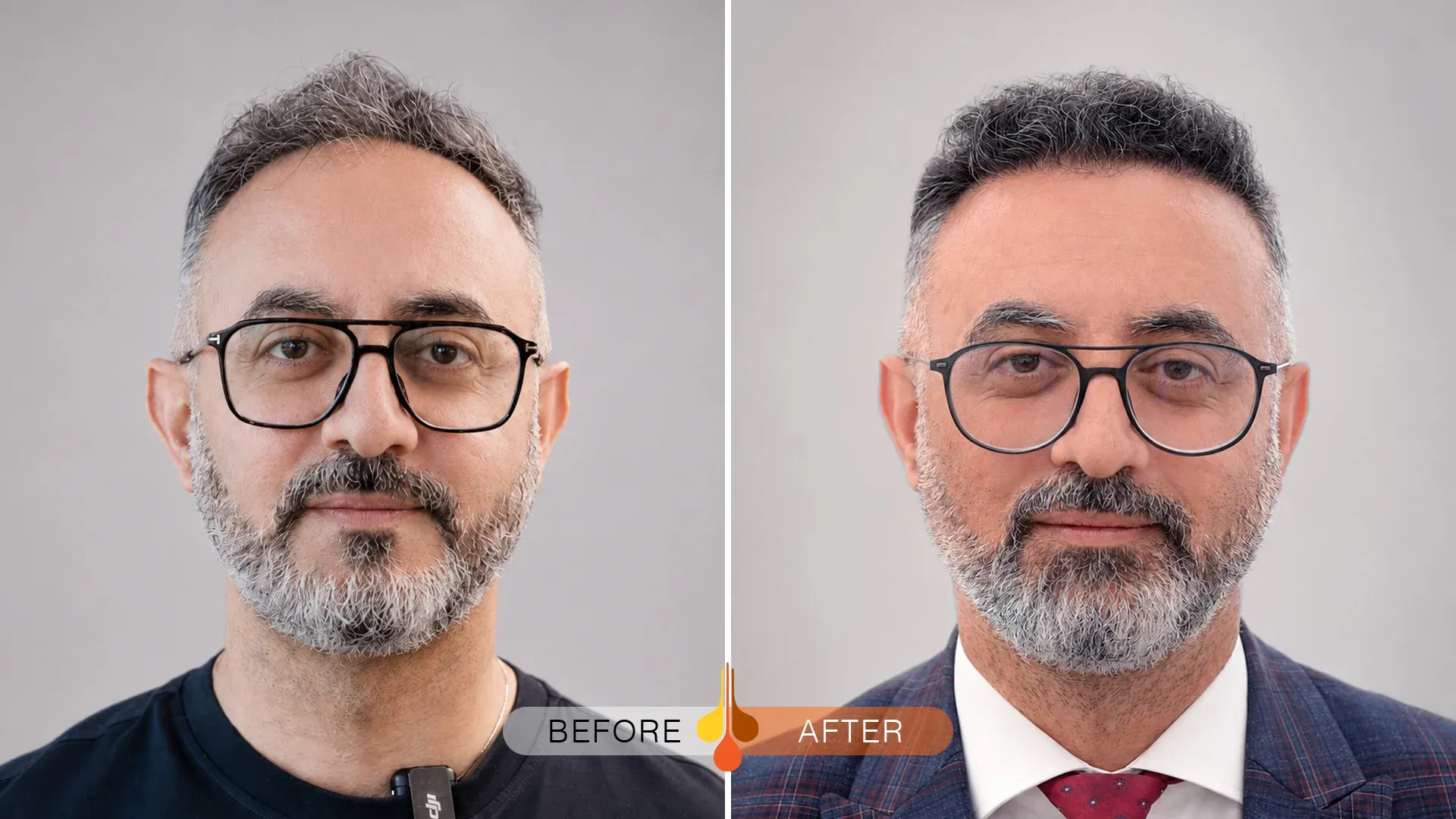
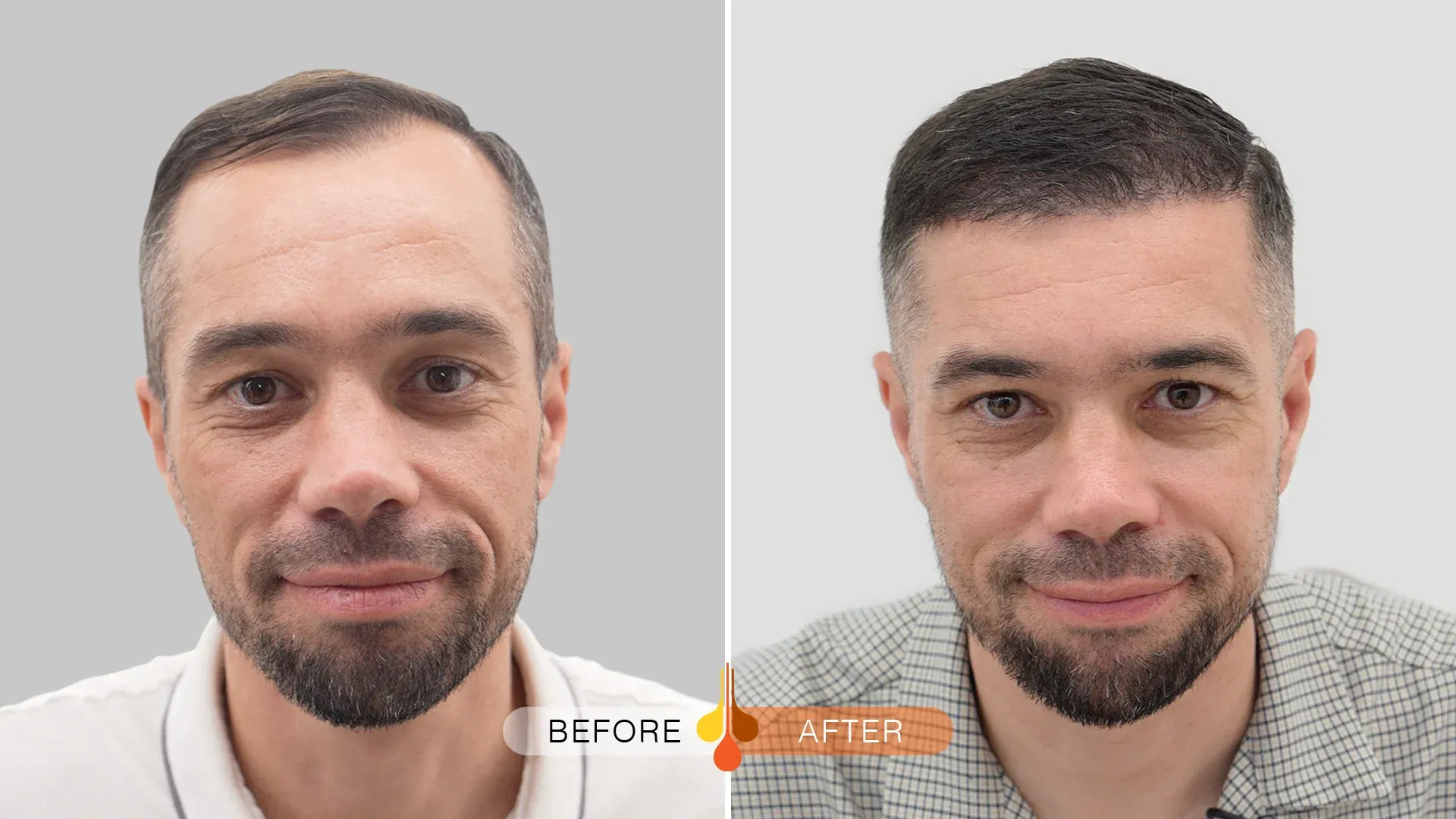
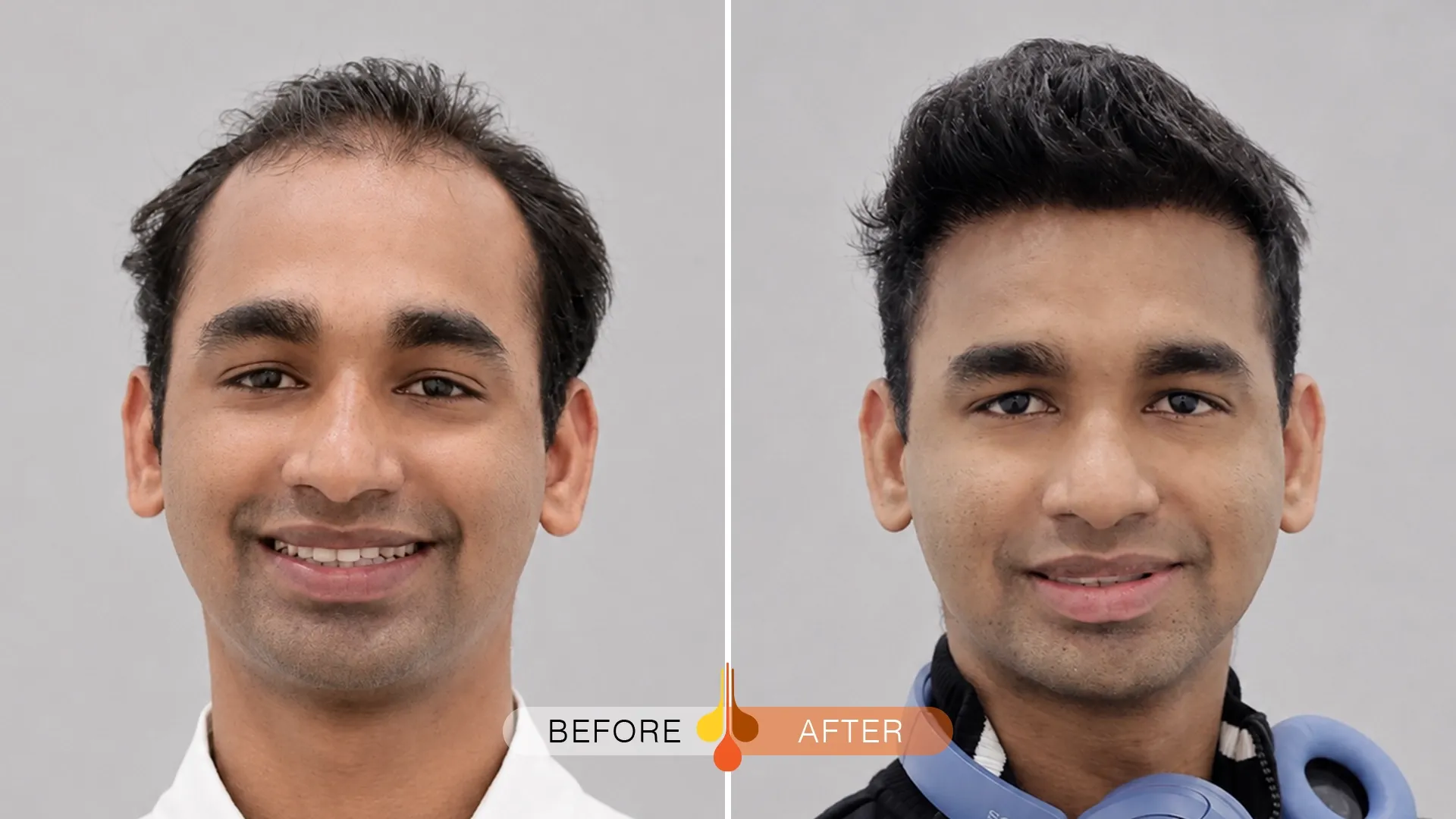
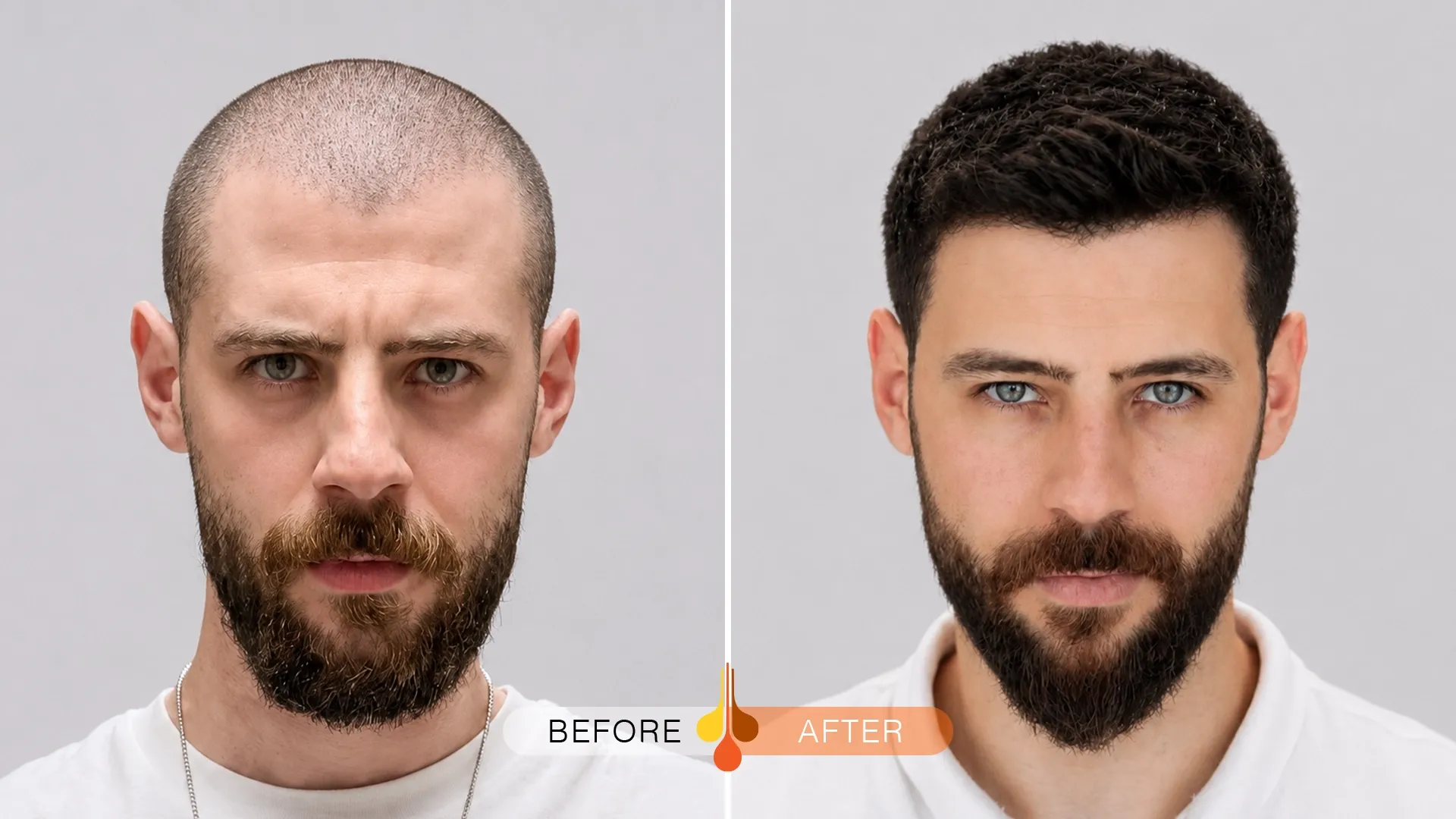
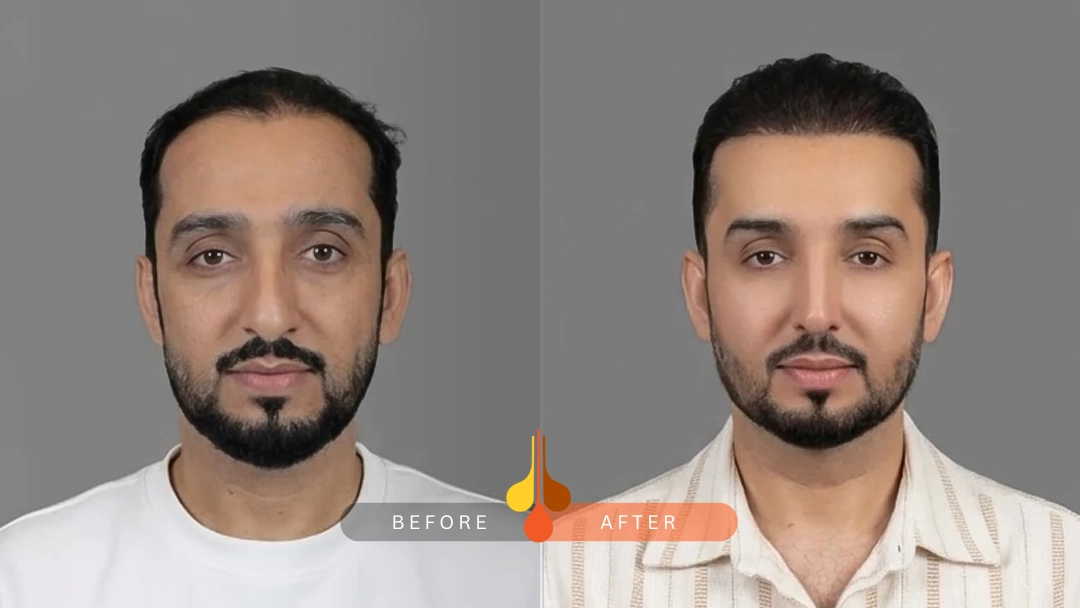
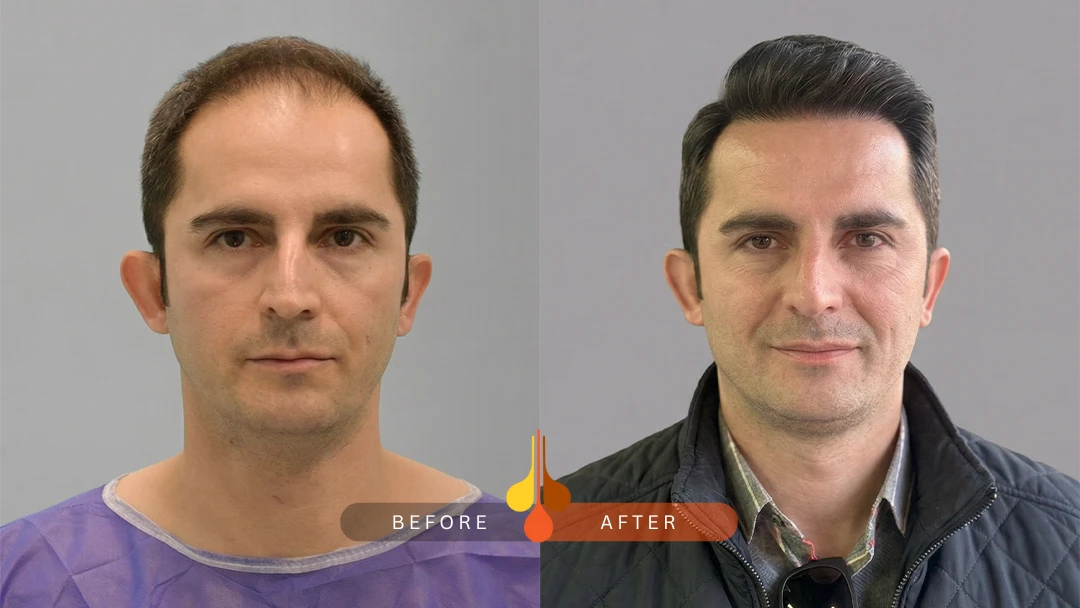
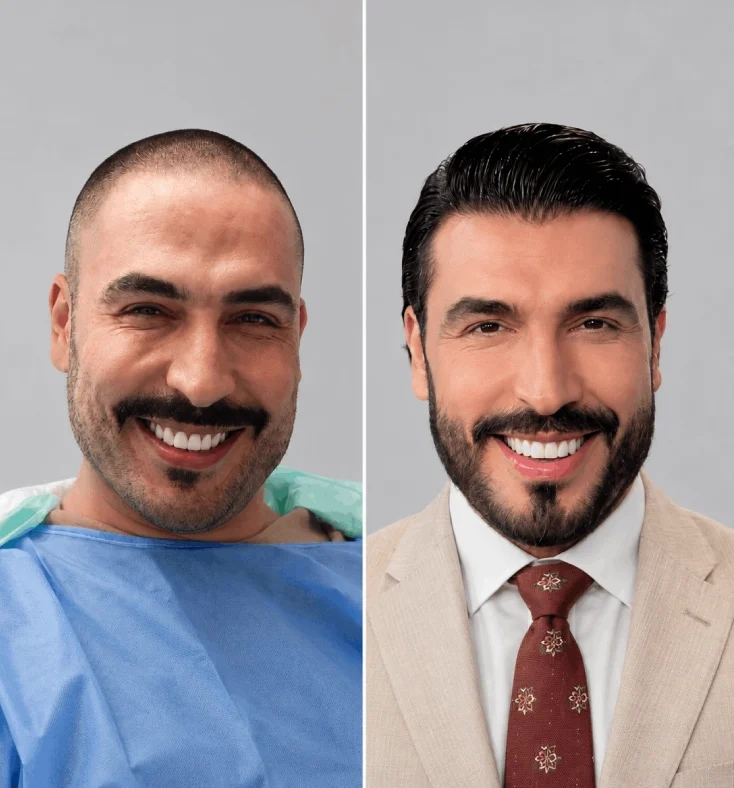
Hair Transplant Before and After
Before and after photos can help patients understand the type of result that may be possible. However, they should always be interpreted carefully.
Every patient has a different donor area, hair texture, hair loss stage, graft number, and healing response. A result that looks achievable for one patient may not be realistic for another.
The most useful before-and-after examples are those that show patients with similar hair loss patterns, similar donor quality, and similar treatment goals.
Hair Transplant Cost: What Affects the Price?
Hair transplant cost depends on several factors. The most important factor is usually the number of hair grafts needed, but it is not the only one.
Cost may be affected by the treatment area, number of grafts required, chosen technique, donor area quality, hairline or crown complexity, location, clinic standards, aftercare structure, and whether additional treatments are needed.
A low price should not be the main reason for choosing a hair transplant clinic. Poor planning, weak donor management, or unnatural graft placement can lead to results that are difficult and costly to correct later.
A proper consultation gives a more accurate estimate because the team can assess your hair loss pattern, donor area, and goals.
Hair Transplant Recovery
Hair transplant recovery is a gradual process. Most patients can return to light daily activities within a few days, but the scalp still needs time to heal.
During the first days, mild redness, swelling, tenderness, or scabbing may occur. These changes are usually temporary. The transplanted area should not be scratched or rubbed, and patients should follow washing and aftercare instructions carefully.
In the first few weeks, shedding can happen as part of the normal growth cycle. This does not necessarily mean the grafts have failed. New growth usually starts later, often around 3 to 4 months.
Following proper hair transplant recovery instructions is important because good aftercare helps protect the grafts and supports the final result.
Hair Transplant Side Effects and Risks
Hair transplant is generally considered a safe procedure when performed in a proper medical setting by an experienced team, but side effects can still occur.
Common temporary side effects may include redness, swelling, itching, mild discomfort, scabbing, and temporary shedding. These usually improve with proper care.
Less common risks may include infection, folliculitis, prolonged numbness, scarring, or poor growth. The risk of unnatural results can increase when the procedure is poorly planned, the donor area is overharvested, or grafts are placed at the wrong angle.
Patients should contact the clinic if they notice severe pain, pus, worsening swelling, unusual bleeding, or signs of infection.
Choosing the Right Hair Transplant Clinic
Choosing the right hair transplant clinic is one of the most important decisions in the entire process. A natural result depends on medical experience, careful planning, ethical consultation, and realistic expectations.
When comparing clinics, look for clear consultation, before and after results, doctor involvement, donor-area evaluation, natural hairline planning, aftercare support, and honest discussion of risks and limitations.
A reliable hair transplant clinic should not promise the same result to every patient. It should explain what is realistic for your donor area, hair loss stage, and long-term needs.
At Padra, the treatment journey is built around personalized planning, donor-area preservation, natural hairline design, and recovery support.
Hair Transplant in Kuwait, Dubai, Qatar, and Saudi Arabia
Padra provides hair transplant services across key GCC locations, supporting patients who are looking for natural-looking results, structured consultation, and professional aftercare.
Patients considering hair transplant in Kuwait often look for a balance of natural design, clear pricing, and comfort during the treatment journey. A consultation helps determine the right graft plan, method, and expected timeline.
For patients exploring hair transplant in Dubai, privacy, advanced techniques, and recovery planning are often important decision factors. FUE and DHI options may be discussed depending on the patient’s hair loss pattern and treatment goals.
Patients researching hair transplant in Qatar may be looking for personalized planning, natural density, and follow-up guidance. The right approach depends on donor area strength, the treatment area, and long-term expectations.
For those considering hair transplant in Saudi Arabia, natural hairline design, discretion, and long-term confidence are often central concerns. A proper assessment helps define whether hair transplant, medical treatment, or a combined plan is the best next step.
Related Hair Restoration Services
Hair restoration is not limited to scalp hair transplants. Depending on the patient’s needs, related treatments may also be considered.
Some women may benefit from a hair transplant for women, especially when the donor area is healthy and the hair loss pattern is suitable. Female hair restoration often requires a more discreet approach, with attention to density, styling needs, and donor-area visibility.
For patients with patchy or uneven facial hair, a beard transplant can help improve coverage and shape. The design should follow facial structure, natural beard direction, and preferred density.
An eyebrow transplant requires even more delicate planning because eyebrow hairs grow at specific angles and strongly affect facial expression. For this reason, direction, density, and follicle selection are especially important.
Supportive treatments may also be part of a broader plan. Depending on the case, hair loss treatment, PRP after hair transplant, or hair mesotherapy may be used to support existing hair and scalp health before or after transplantation.
Final Thoughts: Is Hair Transplant Right for You?
A hair transplant can be a strong option for restoring density, improving the hairline, and creating a natural-looking result when the procedure is planned correctly.
The best results come from proper diagnosis, realistic expectations, careful donor-area management, precise graft placement, and a hairline design that suits your face and long-term appearance.
If you are noticing thinning, a receding hairline, crown loss, or visible scalp exposure, the first step is a professional assessment. This helps determine whether a hair transplant is the right choice or whether another hair loss treatment should come first.