









Eyebrow Transplant in Kuwait: Clinical Precision for Natural, Lasting Brow Density
An eyebrow can look like a small feature until it changes. Brow density, direction, and symmetry influence how the eyes read at a glance and how facial expressions land in everyday conversation. When eyebrows become sparse—through genetics, repeated grooming, scarring, or medical causes—the change often feels bigger than it looks on paper.
An Eyebrow Transplant in Kuwait is a hair restoration procedure that rebuilds eyebrow density using a person’s own hair follicles. The objective is not merely adding hair, but achieving an eyebrow that looks natural in motion, blends with existing hairs, and maintains a believable direction and texture under real lighting. This is why the procedure is often described as both surgical and aesthetic: technique matters, and design matters just as much.
What an Eyebrow Hair Transplant Is (and What It Isn’t)
An eyebrow hair transplant in Kuwait relocates hair follicles—most commonly from the scalp donor area—to the eyebrow region. These follicles are implanted one by one at very shallow angles to mimic the natural lay of eyebrow hair. When performed well, the transplanted hairs grow as real hair and can restore areas that have thinned, recessed, or scarred.
It is not a pigment procedure and does not rely on ink. It is not a “quick cosmetic fix,” because the growth cycle of transplanted follicles follows biology. Early healing happens quickly; visible density develops gradually over months.

Why Eyebrows Thin: Common Clinical Patterns
Eyebrow thinning is rarely mysterious, but it can be multifactorial. The cause influences planning, expected graft survival, and the likelihood of needing additional sessions.
Typical patterns seen in eyebrow restoration include:
- Grooming-related loss: long-term over-plucking or threading can lead to follicle miniaturization or permanent loss, especially in the brow tail. This is commonly associated with phrases like eyebrow transplant after overplucking Kuwait.
- Genetic sparsity: some eyebrows are naturally low-density from adolescence onward, often with diffuse thinness rather than patchy gaps.
- Scarring: injuries, burns, or surgical scars can prevent native brow hair from regrowing. In these cases, eyebrow transplant for scar Kuwait is a frequent focus, because scar tissue behaves differently than normal skin.
- Medical causes: thyroid disorders, nutritional deficiencies, certain dermatologic conditions, and autoimmune patterns can affect eyebrows. For stable cases, eyebrow transplant for alopecia Kuwait is sometimes explored, but only when the underlying condition is inactive and well-characterized.
A careful evaluation usually tries to distinguish “hair absent because follicles are gone” from “hair absent because follicles are temporarily suppressed,” because those are two very different treatment problems.
Candidacy: When Results Tend to Be Strongest
In clinical terms, the strongest outcomes usually come from stable hair loss patterns, healthy donor hair, and realistic density goals. The eyebrow region has limited space and a visible hair direction pattern; chasing extreme density can produce a result that looks heavy or directional in a way that feels artificial.
A typical eyebrow transplant consultation Kuwait often assesses:
- Stability of eyebrow hair loss over time
- Skin condition in the recipient area (especially with scars)
- Donor hair suitability (diameter, curl, growth behavior)
- Existing eyebrow hairs that can guide direction and blending
- Aesthetic goals that match facial proportions
Special care is often needed for highly curly donor hair or very thick donor hair, because eyebrow hairs are usually finer and shorter. Texture mismatch does not make a transplant impossible, but it does change design strategy and how “natural” density reads.
Design Matters: “Natural” Is Mostly About Direction
The eyebrow is not uniform. Hair direction changes subtly across zones. This is the part that separates an acceptable outcome from a truly natural eyebrow transplant Kuwait result.
The eyebrow is typically planned in four zones:
The brow head (closest to the nose) generally looks softer and less dense, with a slightly more vertical orientation. The brow body carries the most density and flows laterally. The arch transitions direction and can change the visual character of the face. The tail tapers, often with flatter hair angles and more delicate density.
In a clinical setting, the design phase is often conservative. It aims for believable density first, then refinement. Overly sharp edges, overly symmetric templates, or dense “filled-in” looks can read as unnatural even if the grafts grow perfectly.

Technique Overview: NTF and Why It’s Common for Eyebrows
The most common modern approach is NTF eyebrow transplant Kuwait (Follicular Unit Extraction). Individual follicular units are harvested from the donor area, sorted for single-hair grafts when possible, then implanted into the eyebrow.
Eyebrow work typically favors single-hair grafts because eyebrows are composed largely of single hairs rather than multi-hair follicular units common in scalp regions. If multi-hair grafts are placed in the brow, density can look “chunky,” especially at the brow head.
An eyebrow transplant procedure in Kuwait usually involves local anesthesia, careful donor harvesting, and then implantation that can be the most time-intensive part due to the need for precise angle control.
How Many Grafts Are Typically Used?
Graft numbers vary based on baseline density and the size of the area needing restoration. Some cases focus only on tail thinning; others require full brow reconstruction.
Common clinical ranges often fall roughly between 150 and 400 grafts per eyebrow, but scarring, complete absence, or a thick eyebrows transplant Kuwait goal can push numbers higher. “More grafts” is not automatically “better” in the eyebrow region; spacing must maintain natural flow and avoid vascular compromise in the skin.
The phrase eyebrow transplant grafts Kuwait often appears in planning discussions because graft count is one of the main drivers of surgical time and cost, and it also influences how dramatic the change can be.
Recovery and Regrowth: What the Timeline Usually Looks Like
Eyebrow transplant recovery Kuwait tends to be straightforward, but the timeline for cosmetic payoff is slower than many cosmetic procedures. Early healing is visible; early growth is not.
A typical pattern:
In the first days, mild swelling or redness can occur, followed by small crusts around implanted hairs. Over the next couple of weeks, the area settles. Transplanted hairs commonly shed during the first month or two—this is often called shock shedding and is expected.
Early regrowth frequently begins around the third or fourth month, with progressive thickening and better blending through months six to nine. Mature results often become clearer between nine and twelve months, with subtle refinement continuing beyond that.
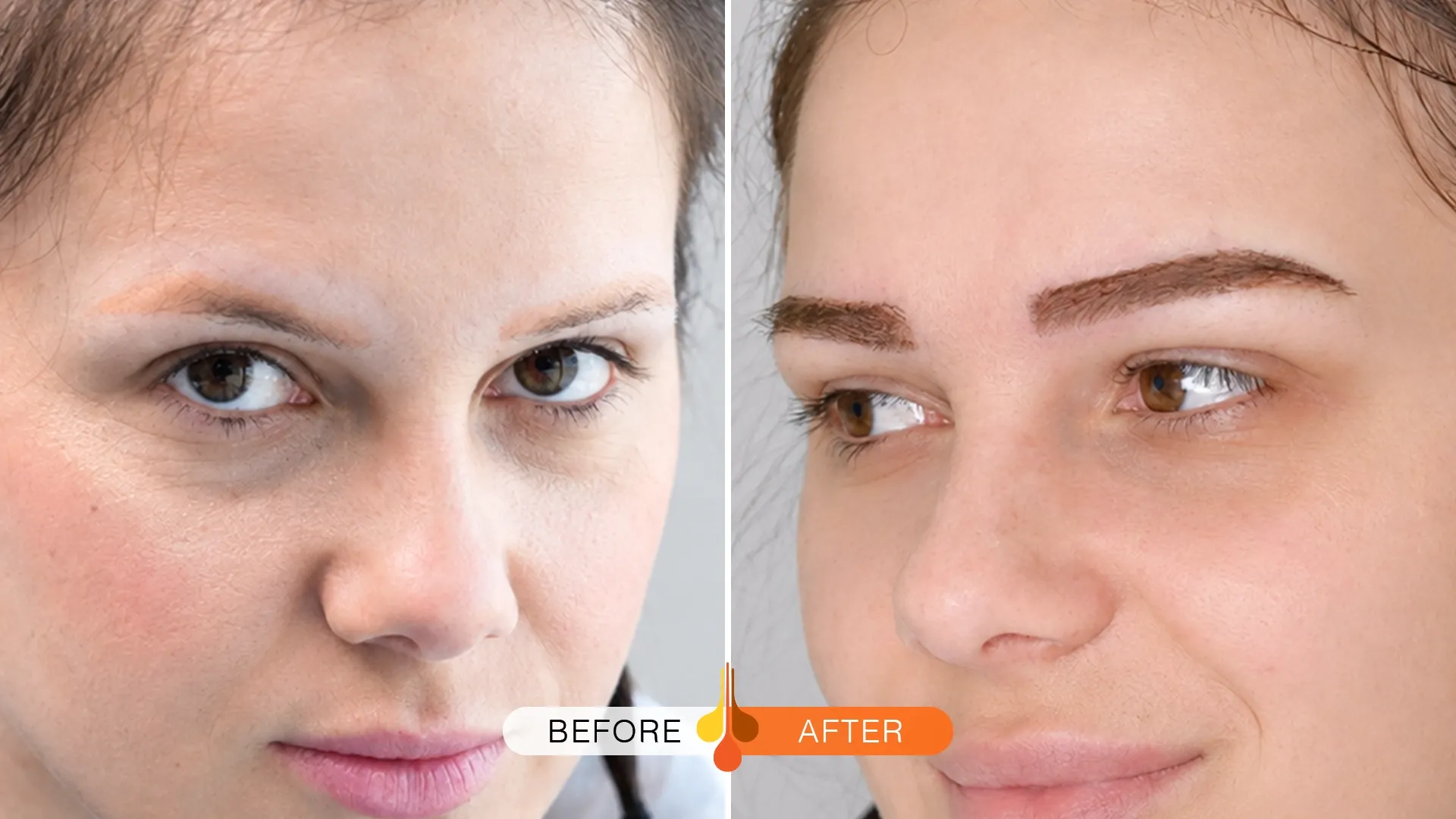
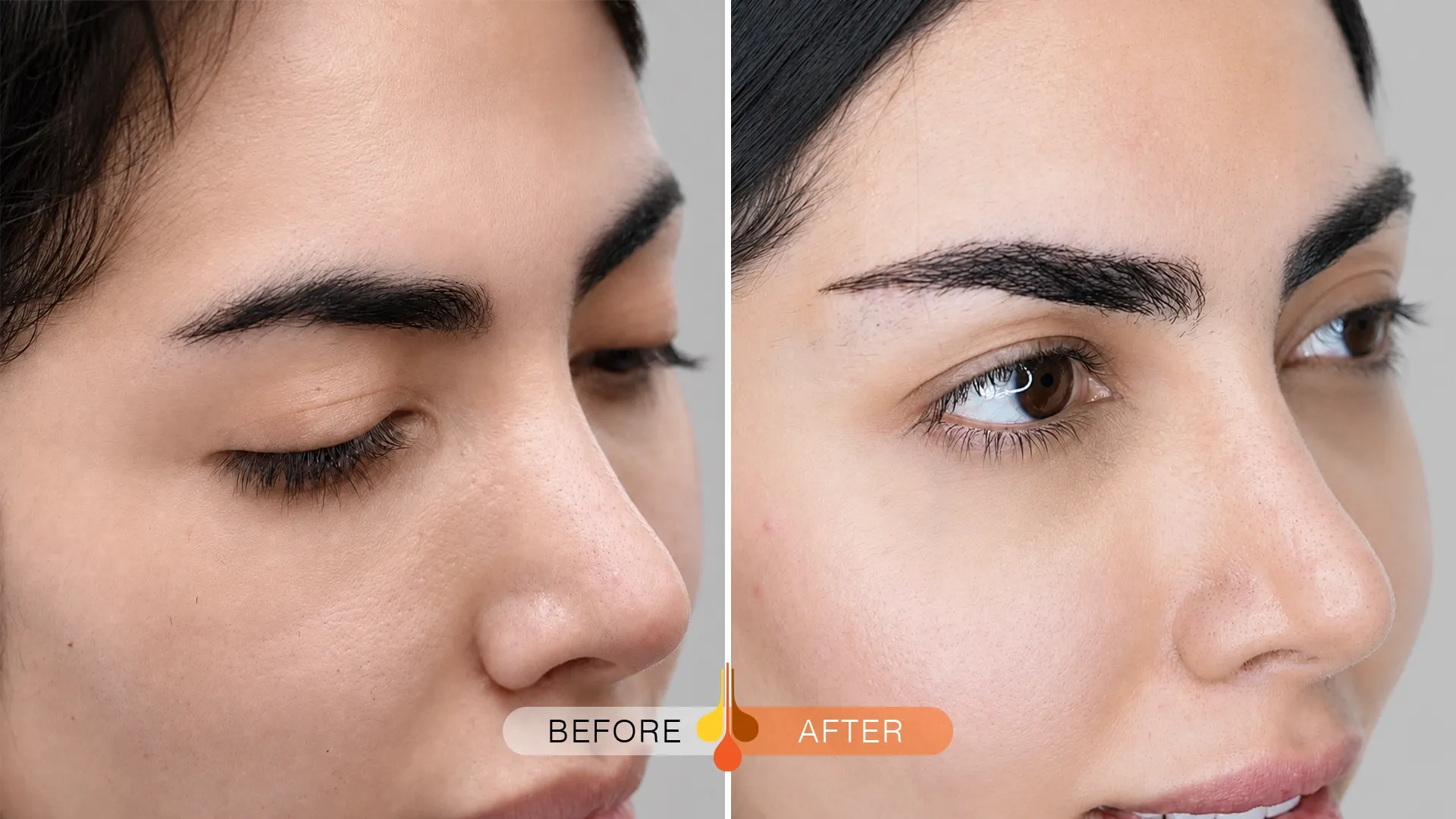
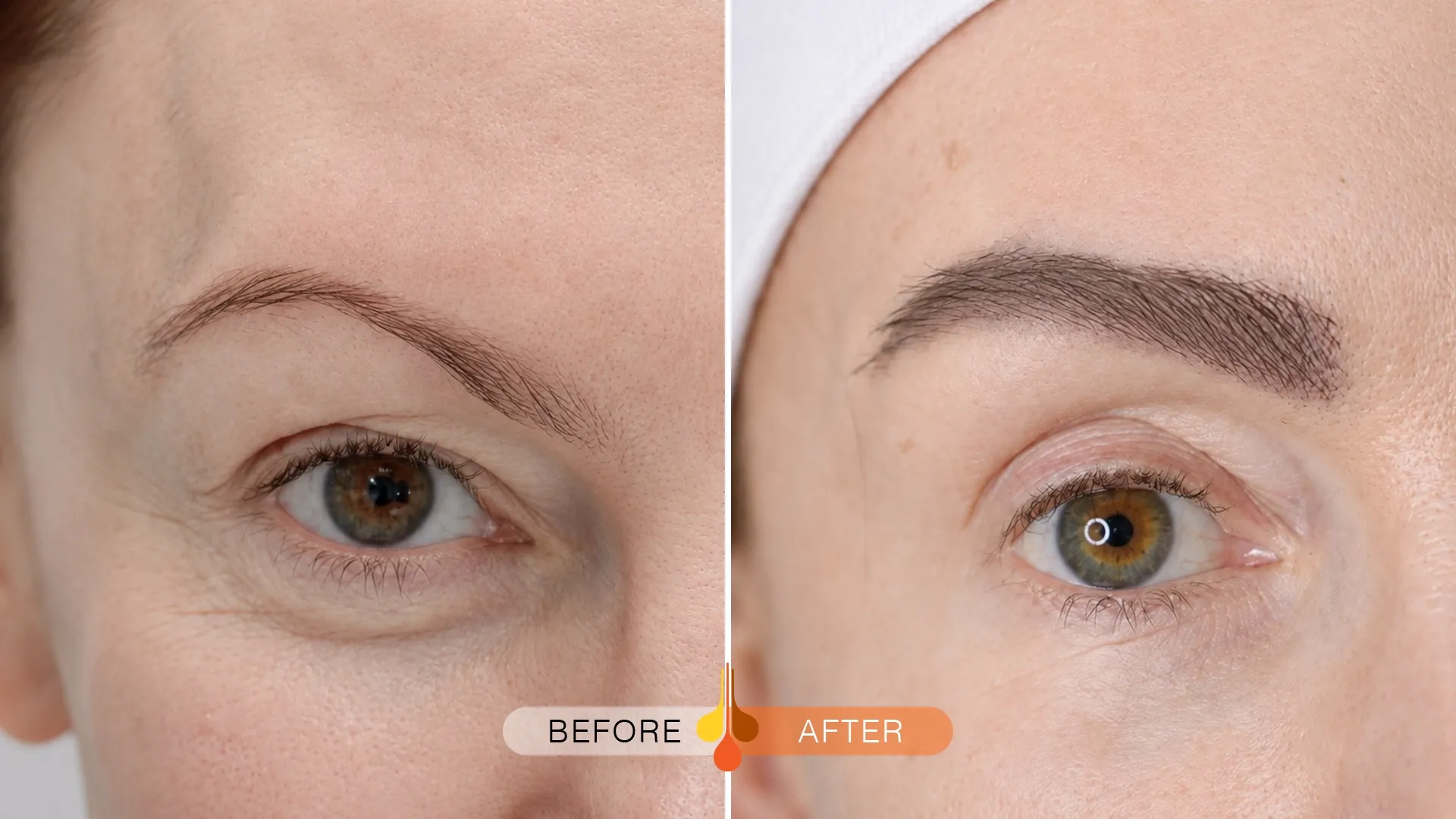
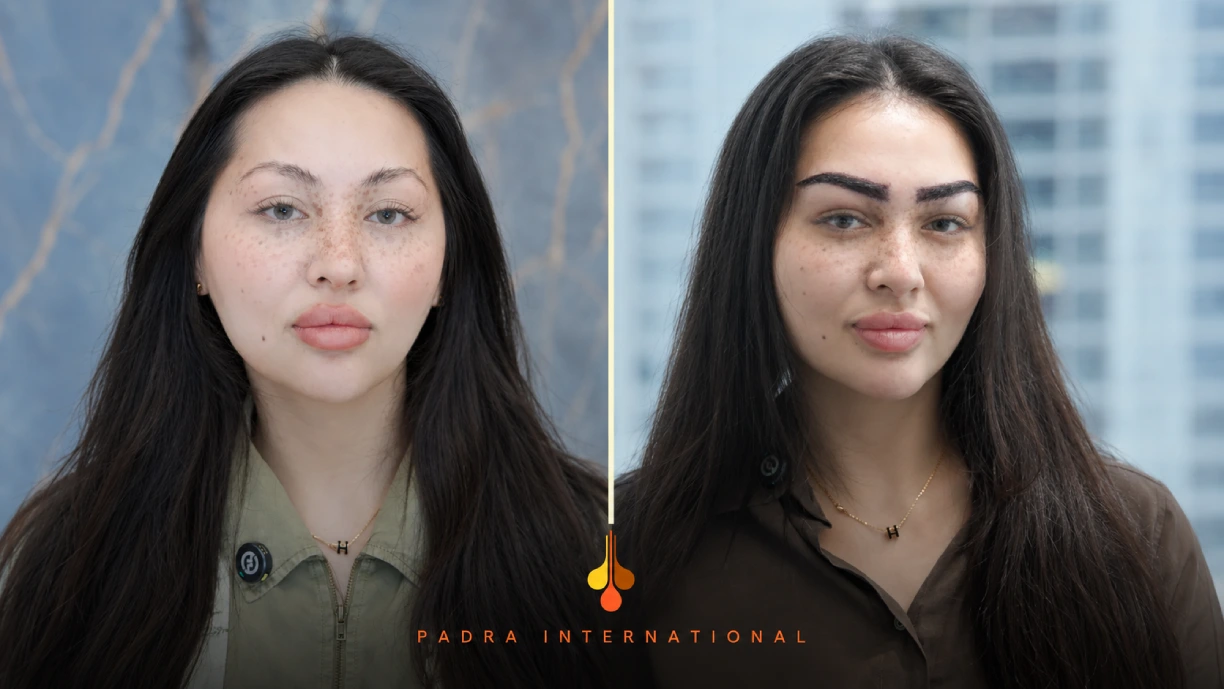
When searching for eyebrow transplant results in Kuwait, the most informative images tend to show healed results at 9–12 months, not immediately after the procedure.
Long-Term Behavior: Maintenance Is Usually Simple but Real
Transplanted eyebrow hairs often behave more like scalp hair than native eyebrow hair because they originate from the scalp donor region. That means growth can be longer and faster. Clinically, this is not a complication—just a property of follicle identity.
Long-term maintenance typically involves periodic trimming and light shaping to keep length consistent with natural eyebrow hair. In well-planned cases, this becomes routine grooming rather than “treatment.”
Eyebrow Transplant vs Common Brow Enhancement Options
|
Option |
What Changes | Longevity | Strengths |
Limitations |
|
Eyebrow transplant |
Real hair density and shape using own follicles | Long-term | Hair is real, can restore sparse brows and some scars | Needs months for final result; trimming often needed |
| Microblading | Pigment strokes in the skin | Often 12–24 months (variable) | Fast definition, useful when hair exists but looks thin |
Not hair; fading/colour shift possible; less ideal for oily skin in some cases |
|
Brow tattoo / shading |
Pigment fill or powder effect | Multi-year | Strong definition | Can look flat; may change tone over time |
| Topical brow serums | Supports existing follicles | Ongoing | Non-procedural |
Limited if follicles are absent or scarred |
|
Cosmetic brow makeup |
Visual fill | Same-day | Flexible and reversible |
Daily effort; can smudge or look heavy in close light |
Comparisons like eyebrow transplant vs microblading Kuwait usually come down to a simple distinction: transplant produces hair; microblading produces pigment. They can sometimes complement each other, but they solve different problems.
H2: Implantation Details: Angle, Depth, and Handling
Eyebrow implantation is technically demanding because eyebrow hairs sit at shallow angles. If an implant angle is too steep, hairs can stick out rather than lay flat. If depth is inconsistent, growth direction and appearance can be compromised.
Many clinics describe the work as “art,” but the clinical translation is: consistent angle control, minimal graft trauma, and disciplined placement density. This is also why people search for an eyebrow transplant surgeon Kuwait specifically, since surgeon skill and team experience can dominate outcomes more than the brand of device used.
Common Eyebrow Transplant Approaches Compared
| Approach | How It Works | Typical Strengths | Typical Trade-offs |
| NTF + forceps implantation | Grafts extracted individually, then placed with fine forceps into recipient sites | High control over placement; widely used | Time-intensive; requires strong team coordination |
| NTF + implanter pen (DHI-style placement) | Grafts extracted individually and implanted using an implanter device | Can streamline placement in skilled hands | Device does not replace design skill; angle control still critical |
| Scar-focused transplantation | Same extraction/implantation, with scar-specific density planning | Can restore brows where native hair cannot grow | Less predictable growth depending on scar vascularity and thickness |
Terminology can be confusing because “NTF” describes extraction, while “DHI” is often used to describe a placement style. For eyebrows, the clinical priority remains consistent: survival of delicate grafts and realistic direction.
Scars and Complex Cases
Scarring requires careful planning. Scar tissue can be thicker, less elastic, and less vascular. Some scars accept grafts well; others do not. When outcomes are strong, it is often because the scar is mature and stable, and the plan is conservative with density per session.
For eyebrow transplant for scar Kuwait cases, the discussion usually includes the possibility of a staged approach: a first session to test growth and establish base density, followed by refinement if needed.
Autoimmune eyebrow loss can be a separate challenge. In stable, well-documented situations, eyebrow transplant for alopecia Kuwait may be considered, but only when disease activity is quiet and the chance of reactivation is carefully weighed.
Risks, Side Effects, and Real-World Variability
Even when performed well, biology adds variability. Commonly discussed considerations include:
Short-term effects may include redness, swelling, bruising, or small crusting. Temporary shedding of transplanted hairs is expected early. Occasionally, folliculitis can occur during regrowth. Patchiness can happen if survival varies across the brow, and a touch-up may be considered in select cases. In scar tissue, growth can be less predictable. Rarely, poor angle control can create hairs that grow upward or outward in a way that needs correction.
A clinically responsible plan treats risk as manageable, not ignored.
Cost Factors in Kuwait: Why Prices Vary
Searches for eyebrow transplant cost in Kuwait are common because pricing is not standardized. Cost is typically shaped by:
Graft number and complexity, whether the case involves scarring, surgeon expertise and time allocation, team experience, facility standards, anesthesia approach, and how follow-up care is structured. Some clinics bundle services; others price by graft count. A quote is most meaningful when it is paired with a clear plan and realistic density goals.
Value in hair restoration is often tied to consistency and predictability, not just the initial price.
Choosing a Clinic: What “Best” Usually Means Clinically
The phrase best eyebrow transplant clinic in Kuwait tends to reflect a desire for reliable outcomes. Clinically, reliability often correlates with:
Documented healed results at 9–12 months, close-up images showing direction and flatness of hair lay, natural transitions at brow head and tail, consistent work across different skin types, and transparent discussion of limitations (especially for scars). It also correlates with careful donor selection; eyebrows can look unnatural if donor hair is too thick or too curly without a compensating design strategy.
A clinic that emphasizes planning and long-term follow-up often signals seriousness more than dramatic marketing promises.
Results: What Counts as “Success”
Success in Eyebrow Transplant in Kuwait is usually evaluated with a mix of objective and aesthetic measures:
Hair survival and density distribution, natural direction under close inspection, smooth blending with remaining native hairs, and an eyebrow shape that fits the face across expressions. “Perfect symmetry” is rarely the goal because real eyebrows are not perfectly symmetrical; the goal is harmony.
For many cases, the most impressive result is subtle: brows that simply look like they were always there.
Notes on Men and Women: Different Density Patterns
Requests sometimes differ by aesthetic preference. Female eyebrow transplant Kuwait discussions often focus on soft fronts, refined arches, and natural taper. Male eyebrow transplant Kuwait discussions often emphasize flatter arches and broader density, with careful avoidance of overly sculpted edges.
These are general patterns, not rules. Face structure and existing brow hair usually guide the best plan.
A Clinically Grounded Bottom Line
A permanent eyebrow transplant Kuwait outcome depends less on buzzwords and more on fundamentals: donor hair suitability, disciplined graft handling, accurate angle control, and a shape that respects facial anatomy. Alternatives like microblading and tattooing can improve definition quickly, but they are pigment solutions. Transplant is a hair solution, and it operates on the slower timeline of biology.
When done with restraint and precision, eyebrow restoration Kuwait can produce results that look natural in the places that matter most—close conversation distance, daylight, and unplanned photos—without requiring heavy styling or constant camouflage.