

Important note: Padra does not currently offer FUT hair transplant procedures at its clinics. This article is provided for educational purposes to help readers understand how FUT works, where it may still be used, and how it differs from other hair transplant techniques.
Follicular Unit Transplantation, better known as FUT hair transplant, is one of the established surgical methods used to restore hair in areas affected by thinning or baldness.
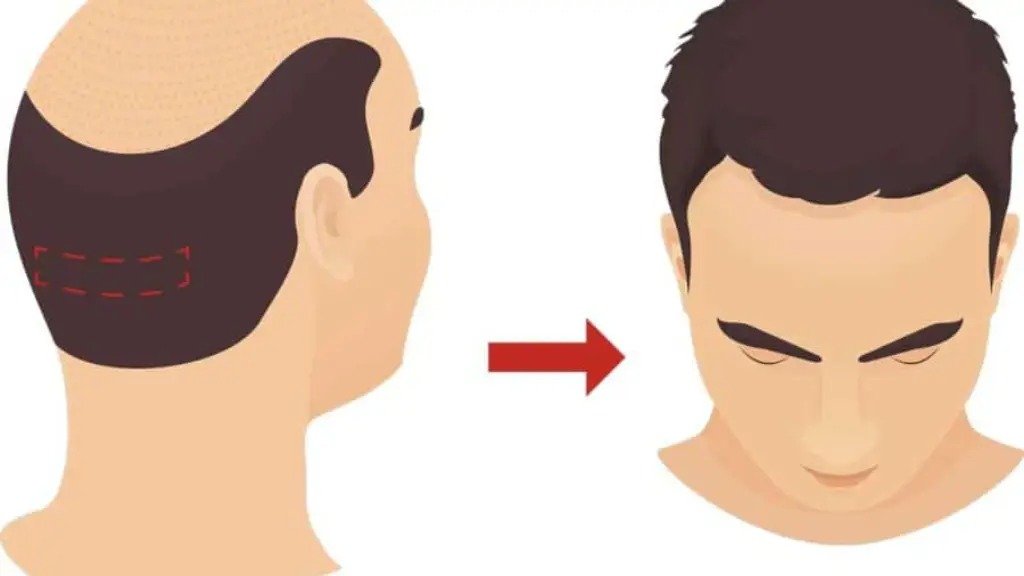
Unlike FUE, where follicular units are extracted individually, FUT involves removing a narrow strip of hair-bearing scalp from the donor area. The strip is then carefully divided into individual follicular units, which are prepared and transplanted into areas where additional coverage is needed.
FUT can make it possible to obtain a relatively large number of grafts during a single procedure. However, because the method requires surgical removal and closure of a strip of scalp, it also creates a linear donor scar and generally involves a longer donor-area recovery than FUE.
Understanding these trade-offs is essential before comparing FUT with other hair restoration techniques.
What Is a FUT Hair Transplant?
FUT stands for Follicular Unit Transplantation and is sometimes referred to as the strip method of hair transplantation.
During the procedure, a surgeon removes a narrow section of scalp from an area with suitable donor hair, usually toward the back of the head. The donor wound is then closed, leaving a linear scar that is typically covered by the surrounding hair once the area has healed.
The removed strip is examined under magnification and separated into naturally occurring follicular units. These grafts are then placed into small recipient sites created in areas affected by hair loss.
The goal is not simply to transfer as many grafts as possible. Hairline design, donor management, graft preparation, placement angle, direction, spacing, and the patient’s future pattern of hair loss all influence the final appearance.
How Does a FUT Hair Transplant Work?
A FUT procedure involves several distinct stages:
- Consultation and donor assessment: The medical team assesses the pattern and extent of hair loss, donor density, scalp condition, scalp laxity, treatment goals, and the number of grafts that may realistically be available.
- Preparation and local anesthesia: The donor and recipient areas are prepared, and local anesthesia is administered before the surgical stages begin.
- Strip harvesting: A narrow strip of hair-bearing scalp is surgically removed from the donor area. The dimensions of the strip depend on factors such as donor characteristics and the planned number of grafts.
- Donor-site closure and graft preparation: The donor area is closed with sutures or staples depending on the surgical approach. Meanwhile, the strip is carefully dissected into individual follicular units.
- Recipient-site creation: Small recipient sites are created according to the planned hairline, distribution, density, angle, and natural direction of hair growth.
- Graft placement: The prepared follicular units are placed into the recipient sites according to the treatment plan.
The existing Padra FUT guide describes a typical procedure as taking approximately 6 to 8 hours, although the actual duration can vary considerably depending on the number of grafts and the complexity of the case.
What Are the Potential Benefits of FUT?
FUT is an older surgical technique, but that does not mean it has no role in modern hair restoration. For selected patients, it may offer several practical advantages.
A Large Number of Grafts May Be Harvested in One Session
Because follicles are obtained from a strip of donor scalp and then dissected under magnification, FUT can be useful when a treatment plan calls for a relatively large number of grafts.
This is one reason the method has historically been considered for patients with more extensive areas of hair loss.
The Donor Area Is Harvested Differently From FUE
FUT removes a strip from a defined donor zone instead of creating thousands of individual extraction points across the donor area.
For some patients, this harvesting approach may be considered when planning how to preserve donor resources over the course of one or more procedures.
It does not, however, mean that FUT is automatically preferable when donor density is limited. Donor quality, scalp laxity, hair characteristics, previous surgery, and long-term planning all need to be considered.
It May Be Economically Attractive in Some Clinics
FUT has traditionally been priced lower than some follicle-by-follicle extraction techniques in certain markets.
Cost should not be used as the main factor when choosing a surgical technique, however. The surgeon’s experience, donor preservation, expected scarring, treatment goals, and suitability of the method are more important considerations.
Transplanted Follicles Can Produce Long-Term Growth
Hair follicles taken from an appropriate donor zone are selected because they tend to retain the biological characteristics of the donor hair after transplantation.
Long-term growth can therefore be possible, but no ethical treatment plan should guarantee that every graft will survive or that the appearance of the surrounding non-transplanted hair will remain unchanged throughout life.
Does FUT Leave a Scar?
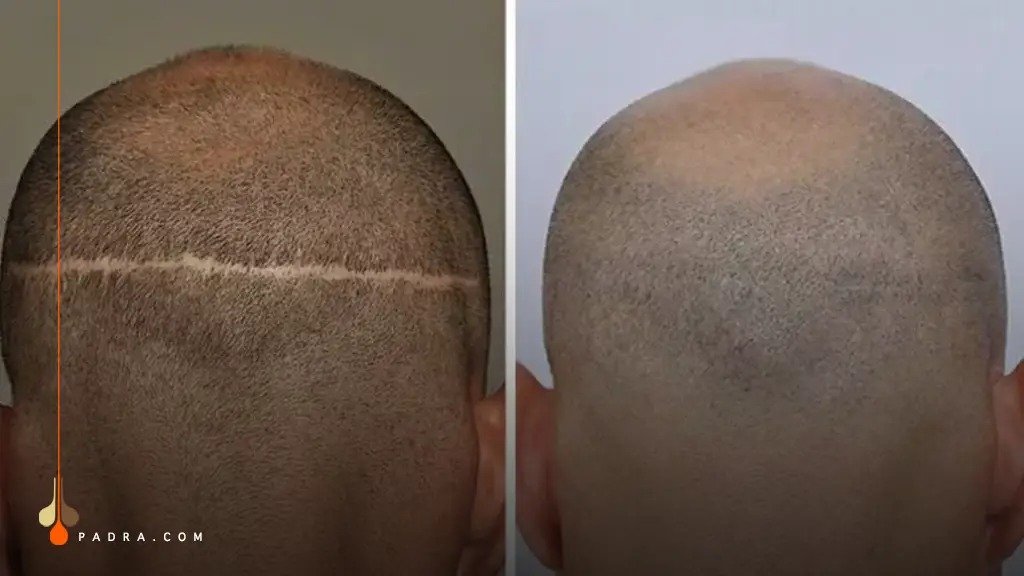
Yes. FUT creates a linear scar in the donor area.
This is one of the main differences between FUT and FUE.
After the strip of scalp is removed, the donor wound must be surgically closed. Once healed, a linear scar remains along the donor area.
Modern closure methods may help reduce the visibility of the scar, and surrounding hair can often conceal it when worn at sufficient length. However, the scar does not disappear completely.
Its appearance can vary depending on factors such as surgical technique, wound tension, individual healing characteristics, previous procedures, and the length at which the patient wears their hair.
Patients who prefer very short or closely shaved hairstyles should therefore discuss the visibility of a FUT scar carefully before choosing this technique.
FUT Hair Transplant Recovery
Recovery after FUT involves both the transplanted area and the surgically closed donor area.
Because the donor site contains a linear surgical wound, recovery is generally longer than after individual follicular extraction.
Some tightness, tenderness, soreness, swelling, or temporary changes in sensation may occur during the early recovery period.
Many patients may be able to return to desk-based work in approximately 10 to 14 days, although this depends on healing, the nature of the patient’s work, and their doctor’s advice.
If non-dissolvable sutures or staples are used, they may be removed at around the 10-day point, depending on the surgical technique and the surgeon’s instructions.
The incision itself continues to mature over the following weeks and months, while transplanted hair develops on a much longer timeline.
When Can You Expect FUT Hair Transplant Results?
A hair transplant does not produce its final cosmetic result immediately after surgery.
Healing of the scalp occurs first, while development of the transplanted hair takes place gradually over many months.
The existing FUT guide notes that the more developed result may take around 12 to 18 months to become visible.
Timing varies between patients, and factors such as hair characteristics, the treated area, graft survival, scalp health, and the individual’s growth cycle can influence how quickly the result develops.
For that reason, early appearance should not be treated as the final outcome.
Who May Be a Suitable Candidate for FUT?
FUT is not automatically the best choice simply because someone has extensive hair loss.
A suitable candidate generally needs a donor area capable of supporting the planned transplant, adequate scalp characteristics for strip harvesting and closure, realistic expectations, and a pattern of hair loss that can be addressed responsibly with the available donor supply.
FUT may be considered for people who require a larger graft session and who are comfortable with the possibility of a permanent linear donor scar.
Scalp laxity is also relevant because enough mobility is required to remove and close the donor strip without excessive tension.
The decision should therefore be based on a complete medical and donor assessment rather than on the number of grafts alone.
Who May Not Be an Ideal Candidate?
FUT may be less attractive for people who regularly wear their hair extremely short, because the linear donor scar may become more noticeable.
Patients with unsuitable scalp laxity, poor donor characteristics, certain scalp conditions, unrealistic density expectations, or medical factors that could interfere with surgery or wound healing may also require a different treatment approach.
A person’s age and the likely future progression of hair loss should also be considered before committing donor hair to any transplant procedure.
FUT vs. FUE vs. DHI
FUT, FUE, and DHI are often presented as competing hair transplant techniques, but the comparison is more nuanced.
FUT and FUE primarily describe how donor grafts are harvested. DHI usually refers to a particular approach to implantation, often using grafts that have been individually extracted.
For this reason, DHI should not always be treated as a completely separate donor-harvesting method.
| Feature | FUT | FUE | DHI |
|---|---|---|---|
| Donor Harvesting | A strip of donor scalp is removed and divided into follicular units | Follicular units are extracted individually | Commonly uses individually extracted grafts before implantation |
| Donor Scarring | Linear scar | Multiple small extraction scars | Donor scarring generally reflects the extraction method used |
| Donor Recovery | Usually longer because the donor area is surgically closed | Generally shorter than FUT | Often similar to FUE when FUE-style extraction is used |
| Large Graft Sessions | Can be useful in selected high-graft cases | Possible depending on donor capacity and treatment plan | Session size varies according to extraction and implantation strategy |
| Very Short Hairstyles | Linear scar may become more visible | Often more practical because there is no long linear scar | Depends mainly on the donor extraction technique |
| Main Distinction | Strip harvesting | Individual follicular extraction | Controlled graft implantation using an implanter-based approach |
The best option cannot be determined from the technique name alone.
Donor density, scalp laxity, hair calibre, degree of hair loss, preferred hairstyle, previous transplant history, treatment area, recovery expectations, and long-term donor planning all matter.
Why Has FUT Become Less Common?
FUT has not disappeared from hair restoration, but many patients now prefer approaches that avoid a long linear donor scar.
The growing popularity of FUE has changed expectations around recovery, donor appearance, and hairstyle flexibility.
Linear Donor Scarring
The most obvious disadvantage of FUT is the linear scar created by strip removal.
For patients who want to wear their hair very short, this may be an important concern.
Longer Donor-Site Recovery
Because the donor area must heal after surgical excision and closure, patients may experience more tightness and require more time for the donor wound to heal compared with less invasive extraction methods.
Changing Patient Preferences
Many patients now prioritize shorter downtime, less visible donor scarring, and greater flexibility in how short they can wear their hair.
These preferences have contributed to the wider adoption of FUE-based approaches.
However, popularity alone does not determine which procedure is appropriate for an individual patient.
Risks and Side Effects of FUT Hair Transplant
FUT is a surgical procedure and therefore carries potential risks and side effects.
Linear scarring: A permanent linear scar is an expected consequence of strip harvesting, although its visibility varies.
Pain, soreness, and tightness: The donor area may feel tender or tight during the early stages of healing.
Infection: As with other surgical procedures, infection is possible, although appropriate sterile technique and aftercare are intended to reduce this risk.
Bleeding and swelling: Temporary bleeding or swelling may occur around the surgical areas.
Changes in sensation: Temporary numbness, tingling, or altered sensation can occur around the donor or recipient areas.
Poor or uneven growth: Not every transplanted follicle necessarily survives, and poor placement, graft damage, or healing problems can affect the appearance of the result.
Scar-related complications: In some patients, a scar may become wider or more noticeable than expected.
These risks are one reason FUT should only be considered after assessment by an appropriately qualified hair-restoration professional.
Is FUT Better Than FUE?
Neither technique is universally better.
FUE avoids a long linear donor scar and generally offers a different recovery profile, which can make it more attractive for patients who wear short hairstyles or want to avoid strip surgery.
FUT, meanwhile, may still be considered in selected cases where strip harvesting fits the patient’s donor characteristics and overall transplant strategy.
The decision should be based on what is appropriate for the individual rather than on claims that one technique is inherently superior.
How Should You Choose a Hair Transplant Technique?
Choosing a hair transplant method should begin with the diagnosis and treatment plan, not with a preferred technique.
A proper assessment should consider the cause and stability of hair loss, donor density, scalp condition, available graft supply, hair calibre, areas requiring treatment, future hair-loss risk, previous procedures, preferred hairstyle, and realistic expectations.
Only after these factors are assessed does it make sense to compare harvesting and implantation techniques.
This is especially important in younger patients or people with progressive hair loss, where using too much donor hair during the first procedure can limit future options.